Streamlined Inspection Workflow
A more guided, step-by-step structure reduced operator confusion and improved consistency.
UX Case Study
Redesigning Volvo’s incoming material inspection process — a critical quality checkpoint in automotive and EV manufacturing.
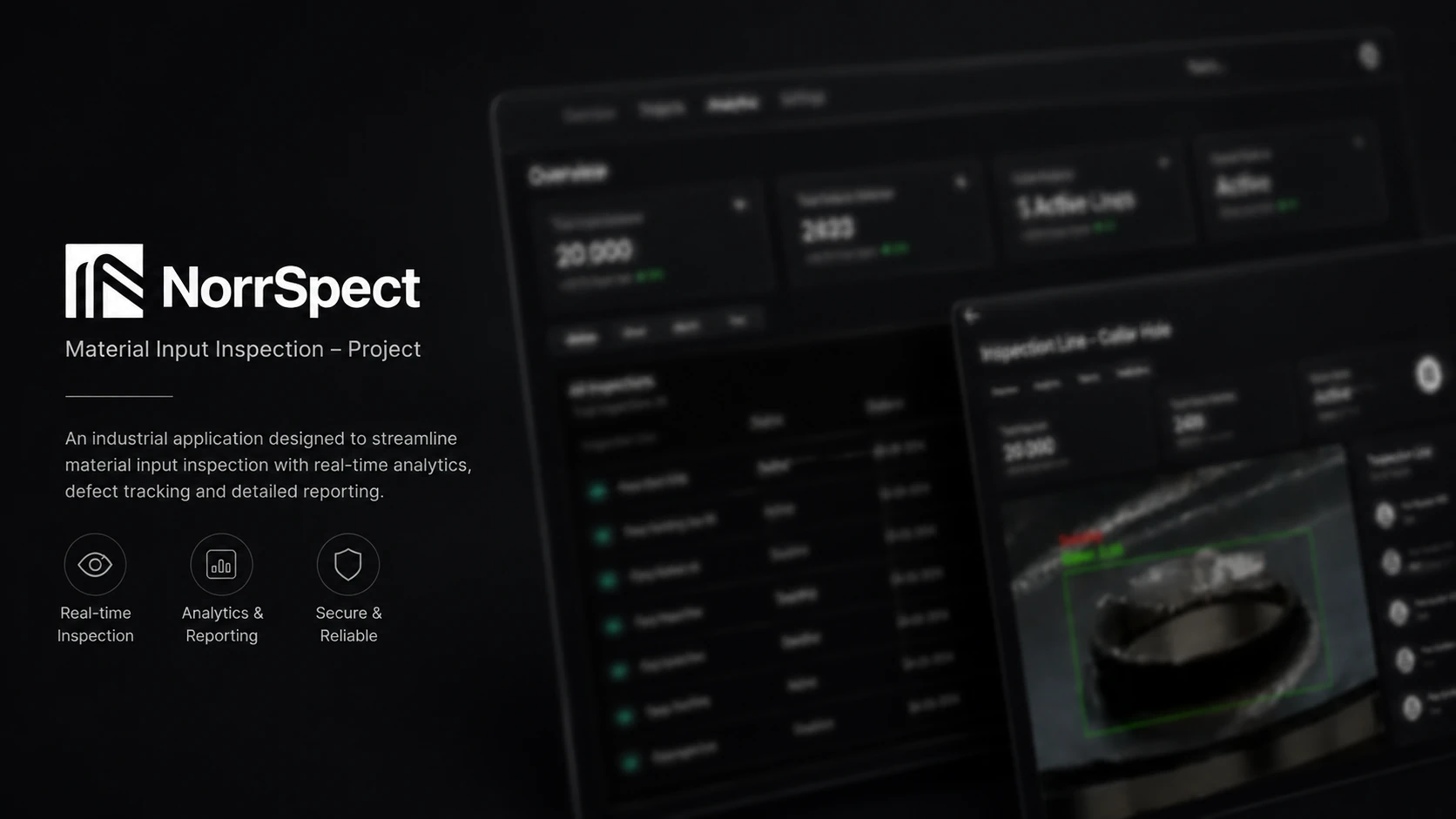
During my internship, I worked on redesigning Volvo’s incoming material inspection process. The existing workflow relied heavily on manual visual inspection, which resulted in inconsistent accuracy, slow detection of defects, and very limited traceability. These issues increased labour cost, created variability in quality, and caused production disruptions.
I contributed to designing an AI-assisted inspection system that automates defect detection, simplifies the inspection workflow, and provides digital, timestamped traceability across the line.
The previous inspection process had major challenges:
This created inefficiencies, delays, and quality risks for downstream production.
Even as an intern, I directly contributed to:
As an intern, I worked under close guidance from senior designers and leads. My research included:
Even without direct user interviews (due to access limitations), I gained clear insights into pain points and system requirements.
The redesigned system focused on speed, clarity, and automation readiness.
A more guided, step-by-step structure reduced operator confusion and improved consistency.
The interface was designed to support AI-powered visual inspection, reducing manual effort drastically.
Improved part labeling eliminated one of the most common operator mistakes (Left vs Right).
Every inspection was logged with timestamps, operator data, and status — replacing manual notebooks.
Validation steps ensured defects were logged accurately before progressing.
Published By NorrSpect
| Area | Before | After |
|---|---|---|
| Defect Detection Accuracy | ~78% | >98.5% |
| Inspection Time per Part | 3–6 minutes | <10 seconds |
| Traceability | Manual logs | Fully digital, timestamped |
| Operator Effort | High | Near-zero |
| Production Downtime | Frequent | Reduced by ~40% |
This project was a major milestone in my UX journey. I learned:
This experience strengthened my confidence in handling complex, large-scale UX problems.
To respect confidentiality, all UI visuals, workflows, diagrams, and system details are intentionally omitted.
Only high-level design decisions, challenges, and measurable outcomes are shared.
I’m happy to walk through my thought process during an interview under confidentiality.